
The layer of icing sugar that slides, melts, or disappears before tasting is not a cooking defect, but rather a reaction often overlooked between residual moisture and the granulation of the sugar. The addition of an unexpected ingredient in the preparation, or applying it at the wrong time, is enough to compromise its hold.
Some lesser-known methods, however, allow one to avoid these pitfalls, even with the most delicate pastries. Comparing techniques reveals notable differences in effectiveness and simplicity of execution, offering a range of solutions tailored to each type of cake.
Why doesn’t icing sugar always stay on cakes?
Icing sugar fascinates with its apparent simplicity. A white cloud on a sponge cake or a loaf cake transforms the pastry’s appearance. Yet, even the most seasoned bakers find that this final touch does not always deliver on its promises. Behind this inconvenience lies a series of physical and chemical reactions at play, dictated by both the texture of the cake and the nature of the sugar used.
Moisture emerges as the number one adversary. A cake that is still warm, just out of the oven, releases steam. This invisible breath instantly dissolves the fine layer of icing sugar laid on its surface. The problem worsens with the presence of fruits, creams, or moist fillings: water migrates towards the crust, accelerating the melting of the decoration. Additionally, there is thermal shock: a surface that is too hot or too cold affects how the sugar grains adhere or disappear.
Recipes rich in butter, eggs, or cream, indulgent cakes, generous sponge cakes, retain internal moisture that is difficult to tame. Conversely, baking with convection heat can yield a drier crust, but this is not always sufficient. The key often lies in meticulous attention: allowing the cake to cool completely, ensuring a well-dried surface, and banishing any trace of liquid before thinking about decoration.
Those in search of techniques to make icing sugar stick to a cake will find their happiness in precise methods, such as those gathered in Effective Techniques for Fixing Icing Sugar on Your Pastries – Gastronomie du Jour. Mastering the subtleties of baking, choosing the right icing sugar for cakes, monitoring humidity: each step conditions the outcome. In the quest to save time or neglect these parameters, it is often the visual effect that evaporates even before tasting.
An overview of essential tips for perfect icing sugar hold
Mastering the surface of the cake
It is impossible to expect good hold without a well-dried, even surface at room temperature. Let the cake cool without haste, on a rack, to avoid any condensation underneath. Detail-oriented bakers, whether working with molly cake or sponge cake, take the time to let the batter aerate. Cake design enthusiasts know this: every step, from baking to removing from the convection oven, aims to limit moisture exposure.
The right technique for dusting
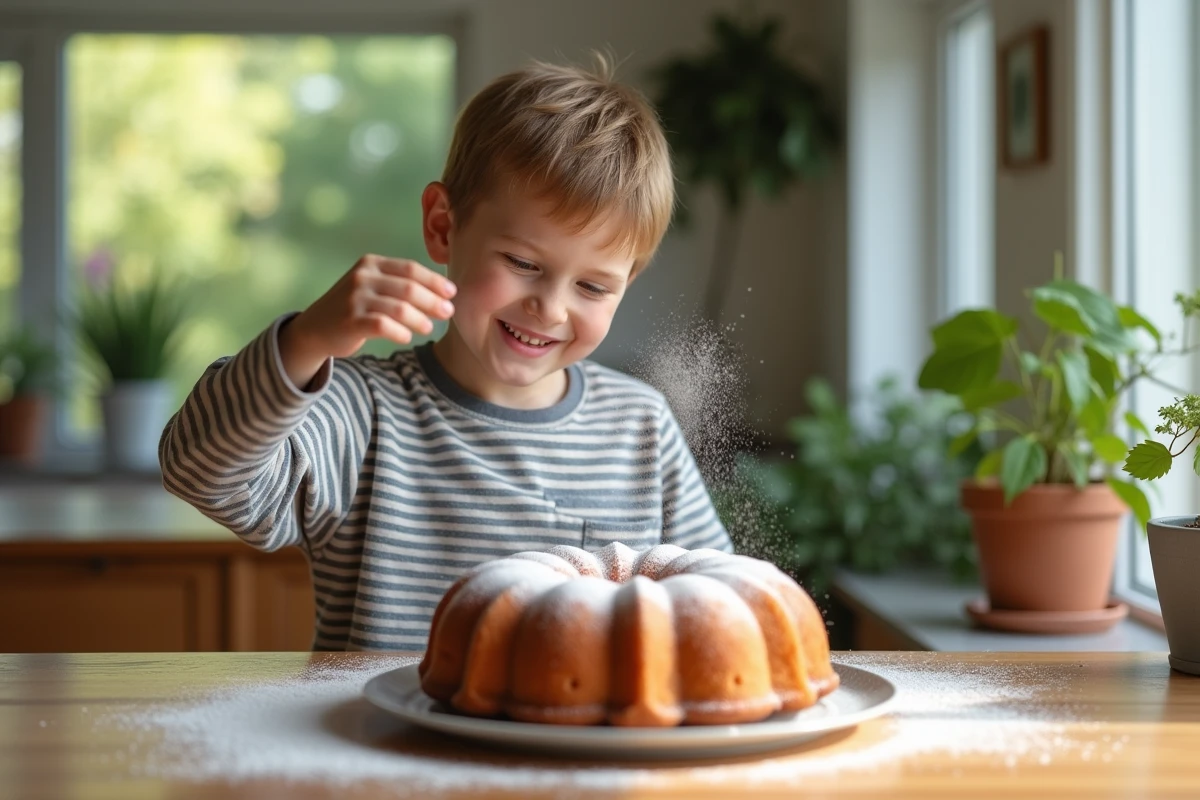
Everything hinges on timing and precision. Use a fine sieve, distributing the icing sugar in a light layer just before serving. This precaution prevents the formation of droplets or stains. For cakes intended for buffets, or cake design pieces that wait in the open air, some go further: they first apply a thin layer of melted white chocolate or whipped butter, then cooled, creating a protective barrier against moisture. This discreet yet effective trick extends the hold of the decoration.
Here are some practical tips to refine the technique:
- Use a convection oven to achieve a drier crust.
- Do not add icing or fresh cream to the surface before dusting with icing sugar.
- Opt for recipes containing more eggs or whipped egg whites to achieve a drier and more stable crumb.
In the world of cake design, success depends on this constant vigilance. Icing sugar does not forgive improvisation: every detail, from baking to finishing, conditions the magic of the decoration. When mastered, it enhances the pastry instead of fading away silently.
Focus on fondant: ally or trap for successful decoration?
Fondant has established itself as an essential tool in cake design. Its soft texture, ease of handling, and ability to shape impressively precise decorations appeal to both experts and amateurs. However, the combination of icing sugar and fondant raises a delicate question: does this duo truly guarantee impeccable hold, or does fondant risk betraying with excess moisture or shine?
A delicate balance between aesthetics and technique
Fondant offers a smooth surface, perfect for refined decorations. However, dusting icing sugar on this coating requires particular attention. A tiny trace of moisture is enough to transform the white powder into a translucent film, ruining the desired effect. To avoid this inconvenience, prefer fondant prepared several hours in advance, handled away from condensation. Professionals use sheets of parchment paper to limit exposure to humid air, and then dust the icing sugar with a very fine sieve.
Here are some reflexes to adopt to keep the fondant decoration impeccable:
- Prepare the fondant several hours before use to limit the risk of sweating.
- Work in a temperate room, without drafts, to preserve the consistency of the decoration.
- Ensure to handle the fondant with dry hands and perfectly clean utensils.
The success of a cake decorated with fondant depends on this rigor. A lapse in temperature or humidity, and the entire effort can falter. With patience and care, the result stands out: a stable, neat decoration that withstands the test of time and scrutiny. Ultimately, the difference between a simple pastry dressed up and a true piece of cake design often lies in these invisible yet decisive details. And if icing sugar remained, after all, the discreet judge of our precision?