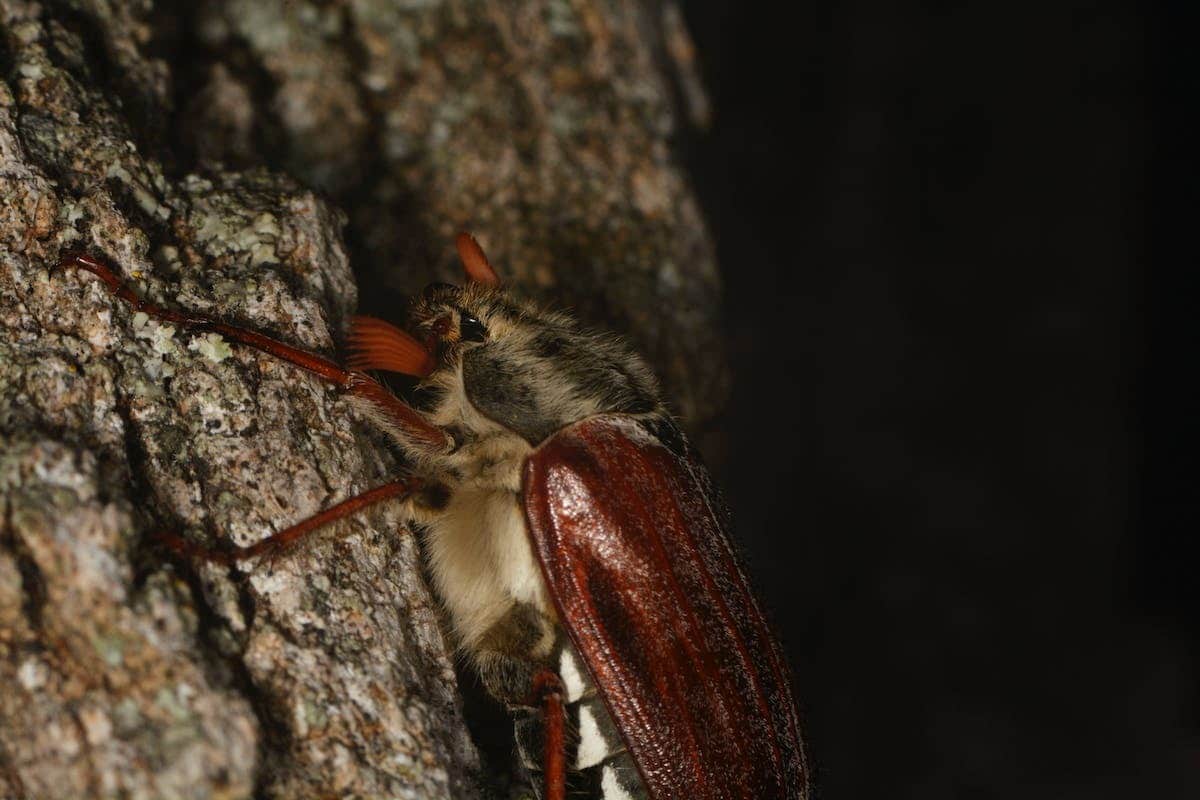
Dipping your hands into the soil, feeling its moist fragrance, watching the plants grow, nothing is more rewarding for a gardener. But what a surprise when you discover, at the heart of this harmony, the larvae of beetles, those pests that devour our precious harvests. The fight against these unwanted guests can seem daunting for some, especially when you don’t know how to identify them. However, there are ways to detect and eradicate them effectively without harming the balance of our gardens. Let’s embark together on this ‘green’ mission to learn more about these critters and the tips for combating them.
Beetles: A Threat to Our Gardens
In the section ‘The Telltale Signs of the Presence of Beetle Larvae‘ of the article titled ‘Beetle Larvae: Tips for Identifying and Effectively Combating Them’, it is essential to learn to distinguish these pests. The visible traces of beetle larvae can manifest in various forms in your garden.
A first distinctive signal may be the sudden appearance of small bumps or mounds on the ground, often near the plantings. These abnormal formations usually betray intense underground activity, typical of the behavior of beetle larvae that burrow into the soil in search of food.
Another striking sign is the bare or completely stripped appearance of areas that are normally green in your green space. The voracious activity of beetle larvae often leads to this characteristic form of desiccation as they primarily feed on vigorous and healthy roots, thus compromising their ability to absorb enough water and ultimately leading to serious degradation of the plant landscape.
Additionally, you may also find these little pests directly during repotting or a simple visual inspection around the roots. However, it requires a certain know-how as spotting them is not always easy given that beetle larvae are naturally discreet and tend to hide well below the ground to escape potential predators.
How to Spot Beetle Larvae
In the section ‘The Damage Caused by Beetle Larvae‘ of our article dedicated to tips for identifying and effectively combating these pests, you must emphasize that beetle larvae do not limit themselves to attacking only the plants in our gardens. In some cases, they can also feed on the roots of lawns, creating bare and damaged areas.
In the face of the damage caused by beetle larvae, it is crucial to adopt a proactive approach to protect our plant heritage. In the next section of this article, we will present the various effective methods for identifying and successfully combating these pests.
The Damage from Beetle Larvae in Our Gardens
Beetle larvae can be difficult to identify, but with a few simple tips, you can spot them quickly. Be sure to know their characteristic appearance. Beetle larvae are insects with a robust, ‘C’-shaped body. They often have a whitish or yellowish color and typically measure between 2 and 4 cm. Their head is light brown with powerful mandibles.
Another effective way to identify beetle larvae is to carefully examine the soil where your plants are located. If you notice the presence of small cavities in the soil, this may indicate that the larvae are digging galleries to feed on the surrounding roots. You may also observe plant debris near damaged plants.
Another tip is to use a trap specifically designed to catch these pests. These traps are often placed underground and contain an attractant that draws in beetle larvae. Once trapped, they can be easily identified by their distinct appearance.
If you still have doubts about the presence of beetle larvae in your garden, do not hesitate to call in a professional specializing in pest control. They usually have the expertise needed to correctly identify these pests and propose an appropriate solution.
Now that you know how to identify beetle larvae, let’s move on to the next section where we will present various effective methods to combat them and protect your plants.
How to Recognize Beetle Larvae
In the fight against beetle larvae, there are several effective methods that will allow you to protect your precious crops. Here are some of them:
Crop rotation: Alternating the types of plantings from year to year is a smart way to avoid infestation by beetle larvae. By regularly changing the type of crop, you reduce their ability to reproduce and feed.
Mulching: A thick layer of organic mulch around the plantings can help prevent the appearance of larvae by creating a less favorable environment for their development.
Using beneficial nematodes: Nematodes are microscopic worms that parasitize beetle larvae by entering their bodies. They are safe for humans and other beneficial soil organisms. You can apply them directly to the soil so they can do their work.
Light traps: Adult beetles are attracted to artificial light at night, making it easier to set up light traps near infested areas to capture these pests before they lay their eggs.
Manual labor: If you have a small garden or a small plot where you grow your vegetables, it is possible to manually remove the larvae present in the soil when they are still few in number.
Biological treatments: There are also various biological products, such as those based on plant pyrethrum or Bacillus thuringiensis (BT), which are effective against beetle larvae while respecting the environment.
Soil maintenance: Be sure to keep your soil healthy and rich in organic matter. A well-balanced soil promotes the development of plantings and strengthens their resistance to pest attacks.
By combining these different methods, you increase your chances of effectively eliminating beetle larvae and protecting your crops from the damage they can cause. Feel free to adapt these techniques according to the specifics of your garden and consult a professional if necessary for more information on combating these pests.
Effective Fight Against Beetle Larvae: Tips
In order to prevent the appearance of beetles in your garden, be sure to keep these pests at bay:
Promote biodiversity: Cultivating a wide variety of plants in your garden will encourage the presence of natural insects that feed on beetle larvae, such as ground beetles and insectivorous birds. By providing a welcome habitat for these allies of the gardener, you will help reduce their population.
Improve soil drainage: Beetle larvae thrive in damp, poorly drained soils. Therefore, make sure to design your flower beds using permeable materials and avoid stagnant water accumulation.
Practice crop rotation: Regularly alternating your crops not only prevents nutrient depletion in the soil but also disrupts the biological cycle of beetles by limiting their food sources.
Use appropriate agronomic techniques: Certain practices such as regular hoeing or aerated weeding not only aerate the soil but also disrupt larvae buried underground.
Avoid excessive use of nitrogen fertilizers: A high concentration of nitrogen promotes rapid and vigorous plant growth, which attracts more adult beetles to lay their eggs.
Invest in resistant plantings: Some varieties of plants are less attractive to beetles than others. Consult your nursery or professional gardener about species that show greater resistance.
Conduct regular inspections: By closely monitoring your crops throughout the season, you will be able to quickly detect any emerging infestations and act accordingly before they spread.
Encourage soil aeration through vermicomposting: Vermicompost is an excellent way to naturally enrich your soil while providing a favorable habitat for beneficial microorganisms that help control unwanted populations.
By following these simple yet effective tips, you will significantly increase your chances of preventing the appearance of beetles in your garden and thus help protect your precious plantings.
Preventing the Appearance of Beetles in Your Garden
Beyond prevention, it is sometimes necessary to adopt methods more directly focused on eliminating beetle larvae. Here are some effective solutions for combating these pests:
Use entomopathogenic nematodes: Nematodes are tiny microscopic worms that feed on beetle larvae and kill them by releasing a toxic bacterium into their bodies. These organisms are available in liquid or powder form and can be sprayed on the infested soil.
Opt for a pheromone trap: Pheromone traps emit a chemical substance similar to the sex hormones of the male beetle, thus attracting females and disrupting their reproductive cycle. Place these traps near affected areas to capture adults before they lay their eggs.
Resort to biological treatment with a low environmental impact insecticide: Some natural insecticides, made from plant extracts or other organic substances, can be used as an alternative to aggressive chemical products. They specifically target the larvae while preserving soil biodiversity.
Employ a physical barrier: You can protect your plantings by placing around them a physical barrier such as fine mesh or insect netting to prevent adults from landing to lay their eggs.
Practice the digging technique: If you spot areas infested with beetle larvae, it is possible to excavate the soil to extract these pests using a hoe or similar tool. This method can be labor-intensive but proves effective when done carefully.
Encourage insectivorous birds: Promote the presence of birds such as blackbirds, sparrows, and titmice in your garden by providing nesting boxes. These species willingly feed on larvae and thus help control their population.
Use a garden vacuum: Equip yourself with a specialized vacuum to easily capture larvae visible on the soil surface without damaging your plants.
Treat in spring and autumn: The ideal times to treat your garden are in spring, when adults begin to emerge from the ground and before they lay their eggs, as well as in autumn, when the young larvae are still vulnerable.
By combining several complementary methods suited to your specific situation, you will maximize your chances of effectively controlling the population of beetle larvae in your garden while preserving its overall ecological balance.