The Spanish regulation on air guns is based on a legal framework distinct from that applied in France or Germany. The power threshold that determines the classification of a pellet rifle in Spain does not correspond to any of the usual limits in the European market, which often leads to confusion during cross-border purchases or transport.
Threshold of 24.2 joules: the Spanish regulatory pivot
Spain structures its classification of air guns around a kinetic energy threshold set at 24.2 joules. Below this value, the pellet rifle or pistol falls under the 4th category of weapons. Acquisition is open to any adult upon simple presentation of an identity document.
However, the weapon must be registered with the local town hall (Ayuntamiento) of the residence. This municipal registration is not optional: it conditions legal possession, even for a low-power model.
Above 24.2 joules, the weapon shifts to a higher category and requires a license issued by the Guardia Civil. We observe that this threshold remains unknown to French buyers who confuse the Spanish limit with the free sale limits in effect in their country. The regulations regarding pistols and rifles in Spain should be verified before any purchase, as the consequences of an undeclared exceedance are severe.
EU Directive 2021/555 and its effects on the classification of air guns in Spain
Since the recent transposition of the European directive 2021/555, Spain has revised several aspects of its regulations: marking obligations, enhanced traceability, and especially the extension of the scope of so-called “assimilated” weapons to firearms. An air rifle equipped with a silencer, tactical accessories, or modified to exceed its original category threshold can now be reclassified.
This transposition, completed during the 2023-2024 period, introduces a level of control that previous texts did not foresee for air guns. Models imported from other European countries are subject to the same rules as those purchased within Spanish territory.
Ballistic converters and power kits under surveillance
The most tangible tightening concerns ballistic converters and spring or valve change kits. The Guardia Civil increasingly equates these modifications to alterations subject to authorization when they cause the weapon to exceed its category threshold.
Several Spanish gun shops have received instructions requiring them to inform buyers: any increase in power beyond the 24.2 joules threshold necessitates a new registration, or even obtaining a license. Installing a power kit on a 4th category rifle without following this procedure exposes the holder to illegal possession charges.
Transport and return to France: the pitfalls of cross-border transactions
Buying a pellet rifle in Spain does not exempt one from complying with the regulations of the country of residence upon return. In France, any air weapon exceeding 20 joules falls under category C and requires either a hunting license or a valid FFTir shooting license.
The gap between the Spanish threshold (24.2 joules) and the French threshold (20 joules) creates a gray area exploited by some online sellers. A model sold legally in free access in Spain may perfectly fall into the French category C. We recommend systematically checking the power in joules listed on the manufacturer’s documentation before crossing any border.
- Below 20 joules, the rifle remains in French category D (free sale to adults, no license required).
- Between 20 and 24.2 joules, the weapon is free in Spain but subject to declaration and licensing in France.
- Above 24.2 joules, a license is required in both countries, with distinct procedures.
Legal use on the ground: authorized areas and restrictions
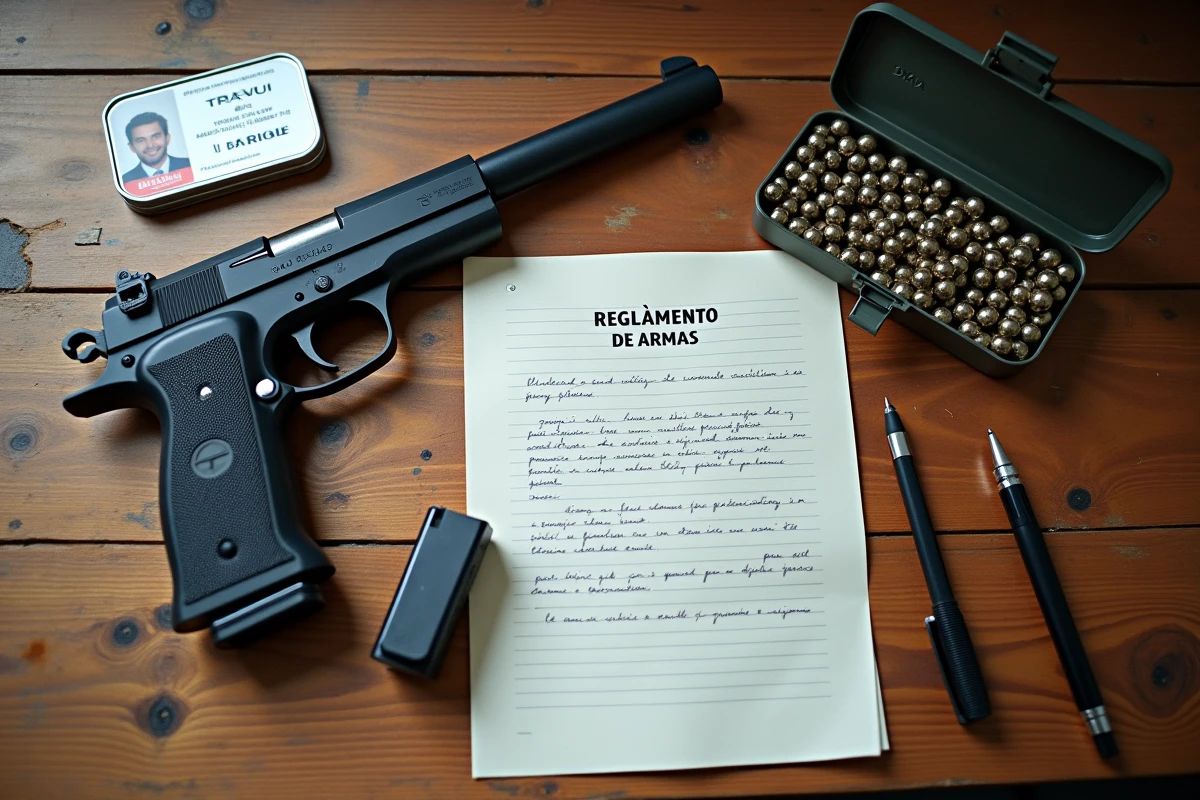
Spain only allows shooting with an air gun in authorized areas. This includes licensed shooting galleries and certain private grounds under conditions. Shooting in urban areas or on public roads constitutes a criminal offense, regardless of the weapon’s power.
Transport must be done in a closed case, with the weapon unloaded. Ideally, the projectile and the weapon should travel separately, although Spanish law is less prescriptive on this point than French law. In the event of a roadside check, proof of municipal registration must be presented.
Civil liability of the holder
The owner of a pellet rifle in Spain assumes civil liability in the event of damage caused to a third party, including on private property. No specific insurance is legally required for 4th category weapons, but Spanish shooting clubs generally require civil liability coverage for access to their facilities.
The regulatory disparity between Spain, France, and Germany remains the main legal risk factor for cross-border shooters. Before any purchase, check the power threshold in joules of the desired model, cross-reference it with the regulations of one’s country of residence, and keep all registration documents: this triptych avoids nearly all problematic situations.