Riding a trike on the French road network requires much more than just a simple purchase. Between vehicle classification, the type of license required, and the approval process, each step involves specific regulatory constraints, varying depending on whether the trike is factory-made or the result of a handcrafted transformation.
Single Approval: The Mandatory Step for Transformed Trikes
A factory-approved trike from its manufacturer (Harley-Davidson Tri Glide, Can-Am Spyder, Rewaco) comes with a European conformity certificate. The registration certificate is then obtained through the usual process. The case of trikes resulting from the transformation of a motorcycle is radically different.
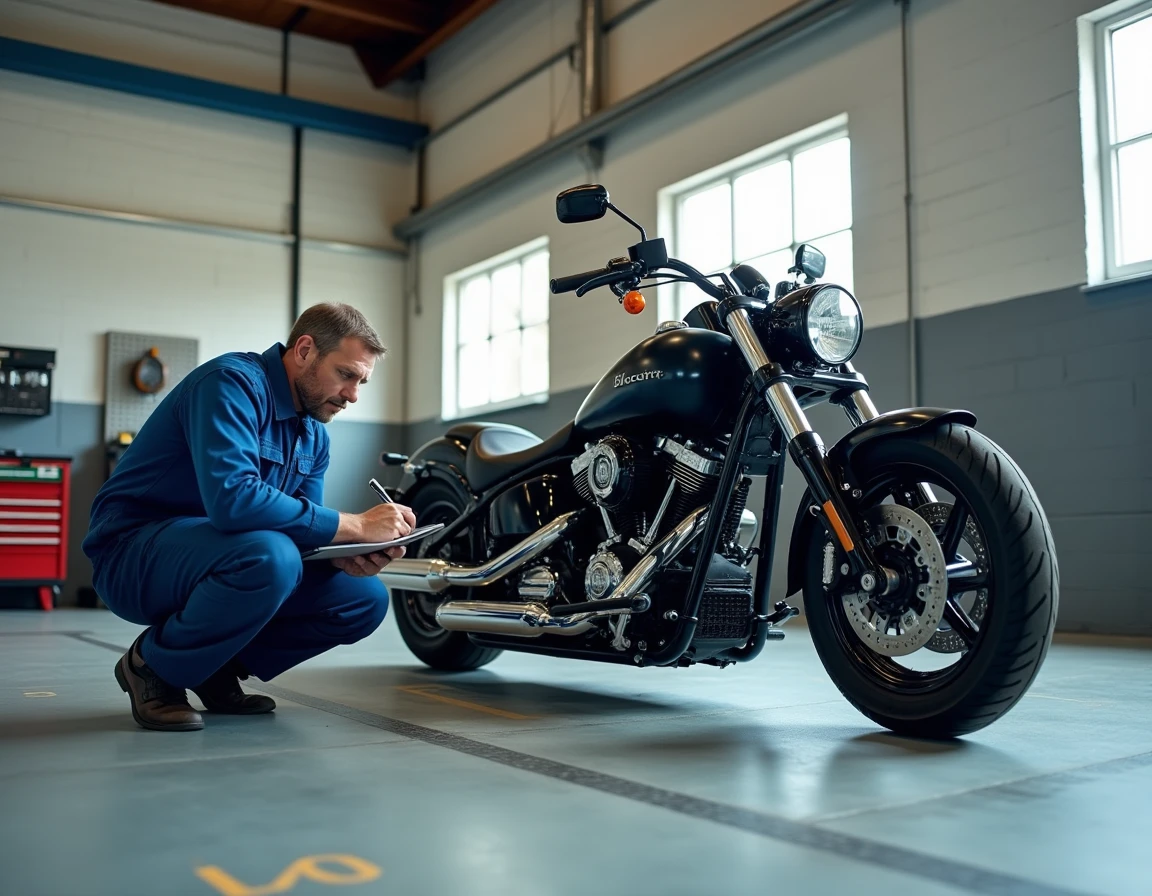
For these vehicles, the DREAL requires a Single Approval (RTI). The owner presents the transformed trike for a technical compliance inspection. The inspector checks compliance with the applicable standard for category L5e: total weight, width between the two wheels mounted on the same axle, braking systems, lighting, mirrors. If the vehicle passes this inspection, a RTI report is issued.
This report constitutes the central piece of the registration file. It must be accompanied by the conformity certificate from the transformer, proof of identity of the owner, and proof of residence. Without this report, no registration certificate can be issued. Understanding the steps for a homologated trike allows for anticipating each step before getting stuck at the counter.
L5e Standard and Technical Requirements for a Homologated Trike in France

French regulations classify trikes in category L5e, that of motor tricycles. To qualify, the vehicle must meet criteria set by the LR3 TM Category standard.
- A total weight in load of less than 1,000 kg, which effectively excludes certain oversized handcrafted constructions
- Independent braking systems on each wheel set (front and rear), compliant with road safety requirements
- A complete lighting system: position lights, low beam lights, stop lights, turn signals, and reflectors
- An overall width between the two wheels on the same axle that remains within limits defined by regulations
Field reports over the past few years indicate a stricter application of RTI controls. Points that were once checked superficially (noise levels, exhaust compliance, rear axle attachment) are now subject to thorough examination. Some transformers report refusals due to welds deemed insufficient or undocumented suspension systems.
This increased rigor complicates the situation for older trikes, particularly those imported from Germany with a foreign registration certificate. A trike registered across the Rhine in the 1990s may not meet current French RTI control requirements, even if it was legally circulating in its country of origin.
License B and 7-Hour Training: What the Trike Regulations Say
There are two pathways to drive an L5e category trike in France. The first is through the A license (motorcycle license), which provides direct access without additional conditions.
The second relies on the B license, under cumulative conditions. The driver must have held their car license for more than two years and have completed a 7-hour practical training provided by an accredited driving school. For holders of a B license obtained from January 19, 2013, an age requirement is added: they must be at least 21 years old.
An exemption exists for drivers who can prove they have driven a light motorcycle or a three-wheeled scooter between January 1, 2006, and December 31, 2010. Proof must be provided by an information statement issued by the insurer.
A point often overlooked deserves to be highlighted: the equivalence of B license to L5e trike only applies in France. A French driver crossing a border with their trike and only a B license risks being fined, as this equivalence is not recognized in other European countries. An A license remains necessary for driving abroad.
Transformation Kits and Non-Homologable Trikes in France
Not all trikes are homologable. Transformation kits with stabilizers, particularly manufactured in Portugal, that retain the original motorcycle’s rear wheel, are strictly prohibited in France. A vehicle modified by such a kit does not correspond to any category of the European regulation for two, three, and four-wheeled vehicles.
Installing this type of kit results in the permanent non-compliance of the motorcycle. The system alters the technical characteristics of the vehicle (geometry, center of gravity, cornering behavior) too profoundly to be considered a simple accessory. No RTI can regularize this situation.
The consequences are severe: fines, vehicle immobilization, invalidated insurance in the event of an accident. Some owners discover this reality after purchase, especially in the second-hand market where these kits still circulate.
The French trike market remains fragmented. There is no centralized aggregator that lists all homologated models and approved transformers. Checking the homologation before any purchase remains the only reliable precaution, by systematically requesting the conformity certificate or the RTI report from the seller. A trike without one of these documents can never be registered legally.