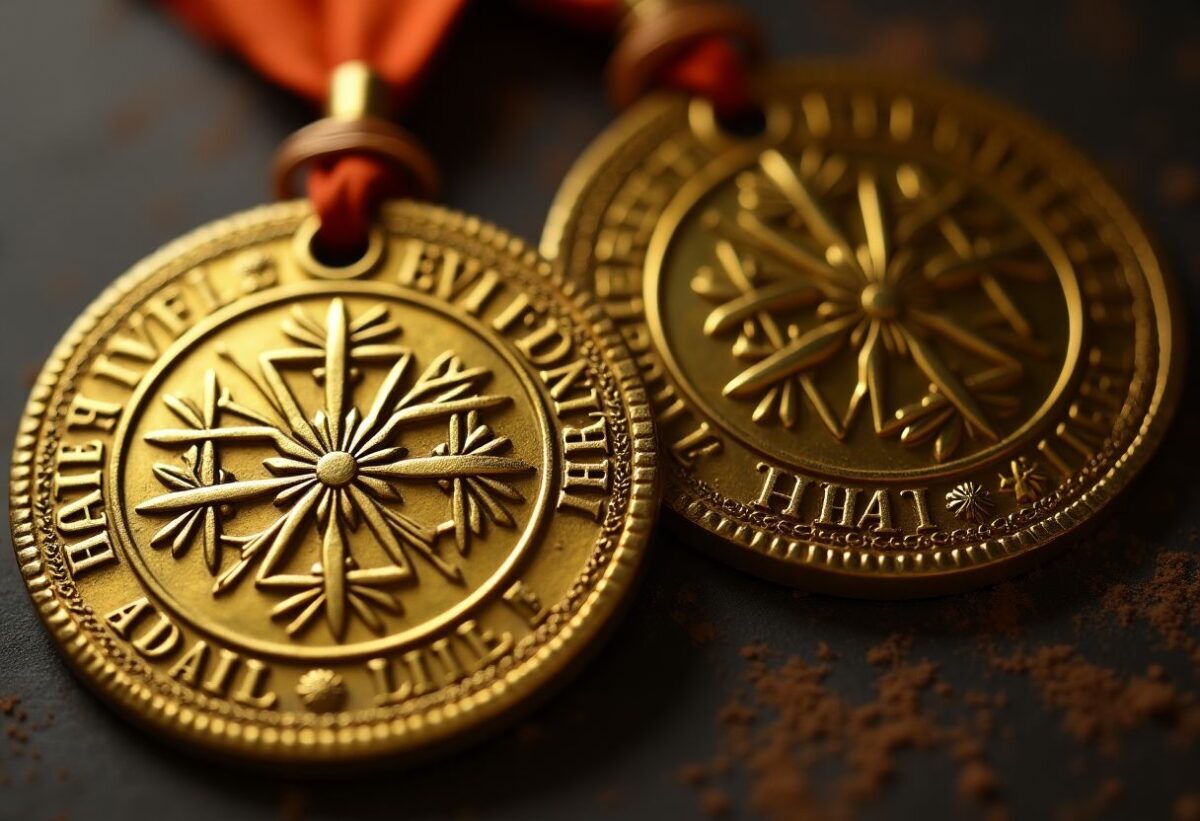
In a world where fashion changes with the seasons, certain objects transcend trends to become symbols of tradition and timeless value. Among these objects, the gold medallion stands out for its beauty and history. For centuries, it has adorned the necks of young children, symbolizing important moments such as baptism, communion, or even a significant birthday. More than just a piece of jewelry, it is often imbued with deep personal and familial significance, passed down from generation to generation.
Historical and Cultural Origins of the Gold Medallion
Medallions have a long and rich history that dates back to antiquity. In many cultures around the world, owning a precious medal was not only a symbol of wealth but also of status and divine protection.
- In ancient Rome, medallions were often worn by members of the upper class to display their rank and fortune. They were sometimes engraved with the likeness of gods or emperors.
- In ancient Egypt, gold amulets were worn for protection and to invoke the blessing of the gods.
- During the Middle Ages, religious medallions became popular in Europe, often given during sacred ceremonies such as baptism or first communion.
These traditions continue today, with each medal adorning a child’s neck serving as a bridge between the past and the present.
Symbolism and Meaning in Religious Ceremonies
The gold medallion holds particular importance in religious ceremonies, especially in Christian traditions where it is often associated with sacraments.
During a Catholic baptism, giving a medal of the Virgin Mary or a patron saint is a well-established tradition. It represents not only faith but also divine protection for the newly baptized child. For first communion, a medal is often chosen to remind the child of this sacred moment and their commitment to their faith.
These medals are not just gifts; they often become family treasures, filled with memories and prayers. They are sometimes passed down from one generation to the next, each gold medallion adding a layer of personal history to that of the family.
Handcrafted Production and Material Choices
The creation of a gold medallion is an art in itself. Goldsmiths put all their expertise into crafting unique pieces that combine aesthetics and meaning. This creative process involves many choices, particularly regarding materials and engraved patterns.
- Choice of gold: The carat of the gold is a determining factor in the making of a medal. 18-carat gold is often favored for its durability and brilliant color.
- Customized patterns: Each medallion can be personalized with religious motifs, initials, or important dates, making each piece unique.
- Engraving techniques: Engraving is a delicate art. A particular skill is required to faithfully reproduce designs and inscriptions on such a small surface.
These combined elements give the medal not only material value but also sentimental value, transforming it into a precious heirloom.
The Gold Medallion in the Modern World
In our contemporary era, the gold medallion continues to be a symbol of tradition, but it has also adapted to modern tastes. It remains a cherished gift to celebrate significant events while becoming a timeless fashion accessory.
Modern jewelry designers incorporate innovative designs and combinations of materials to attract a new generation of enthusiasts. While classic models remain popular, more contemporary and minimalist patterns are gaining ground, appealing to those looking to blend tradition with modernity.
Whatever the chosen style, the importance of the medal as a symbol of protection and remembrance endures, preserving its status as a precious and meaningful piece of jewelry for those who wear it.