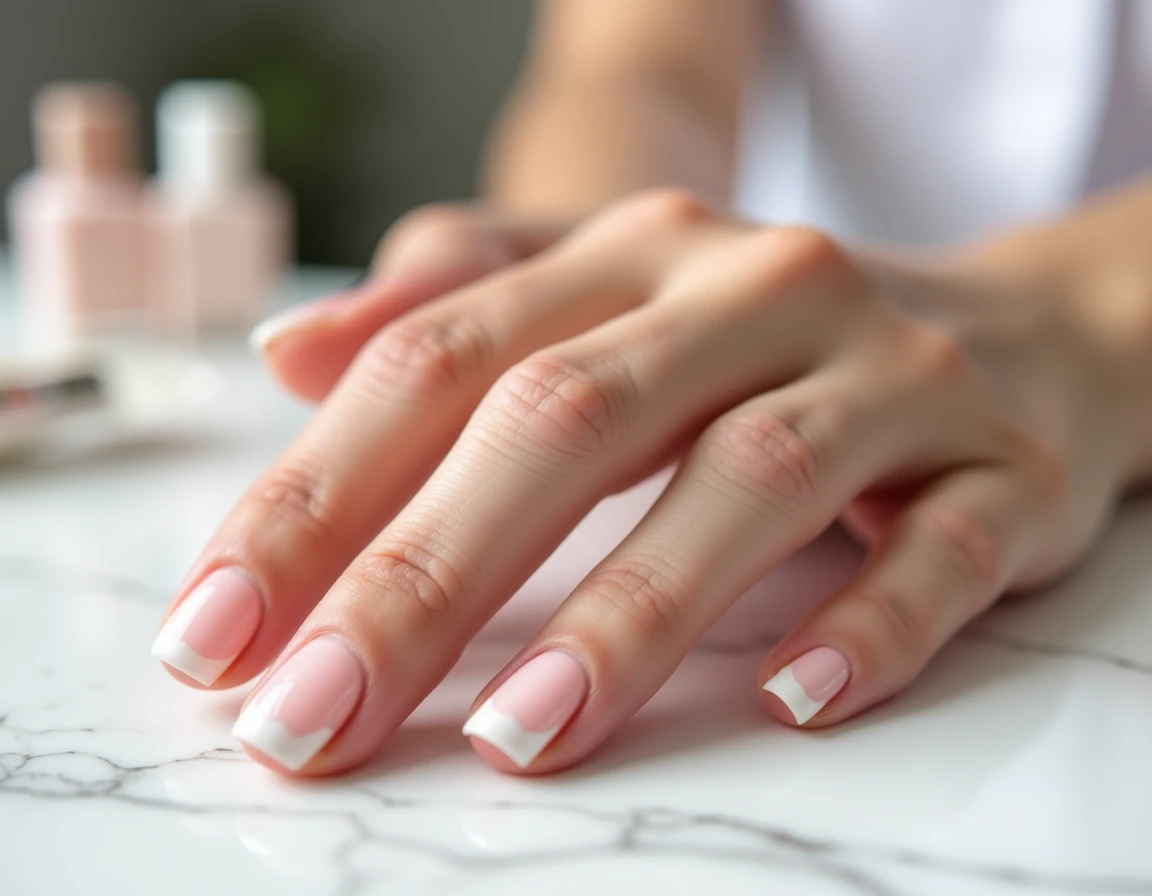
After the removal of a gel application, the nail plate often shows a whitish, opaque, or milky appearance that contrasts with its usual pink color. This whitening indicates a change in the surface keratin, most often related to a loss of hydration and natural lipids during the weeks of application. Understanding the precise mechanism allows for an appropriate response and helps avoid worsening the situation with unsuitable treatments.
Dehydration of keratin: the mechanism behind the white nail after gel
The nail plate is composed of layers of stacked keratin, kept flexible by a balance between water and fatty substances. When a UV gel covers the nail for several weeks, it forms a waterproof barrier that prevents natural moisture exchange between the plate and the surrounding air.
Upon removal, the surface keratin is suddenly exposed. The loss of the natural lipid film causes immediate whitening, comparable to the appearance of skin after prolonged soaking in water. Light no longer passes through the plate in the same way: instead of revealing the pink nail bed, the micro-porosities of the dried keratin diffuse the light and create this opaque effect.
To better understand the causes of a white nail after gel, it is essential to distinguish this benign dehydration from other issues that may visually resemble the same phenomenon but require different management.
This dehydration whitening usually resolves within a few weeks, provided that the nail is not immediately covered with a new application.
Product residues and excessive filing: two often confused causes
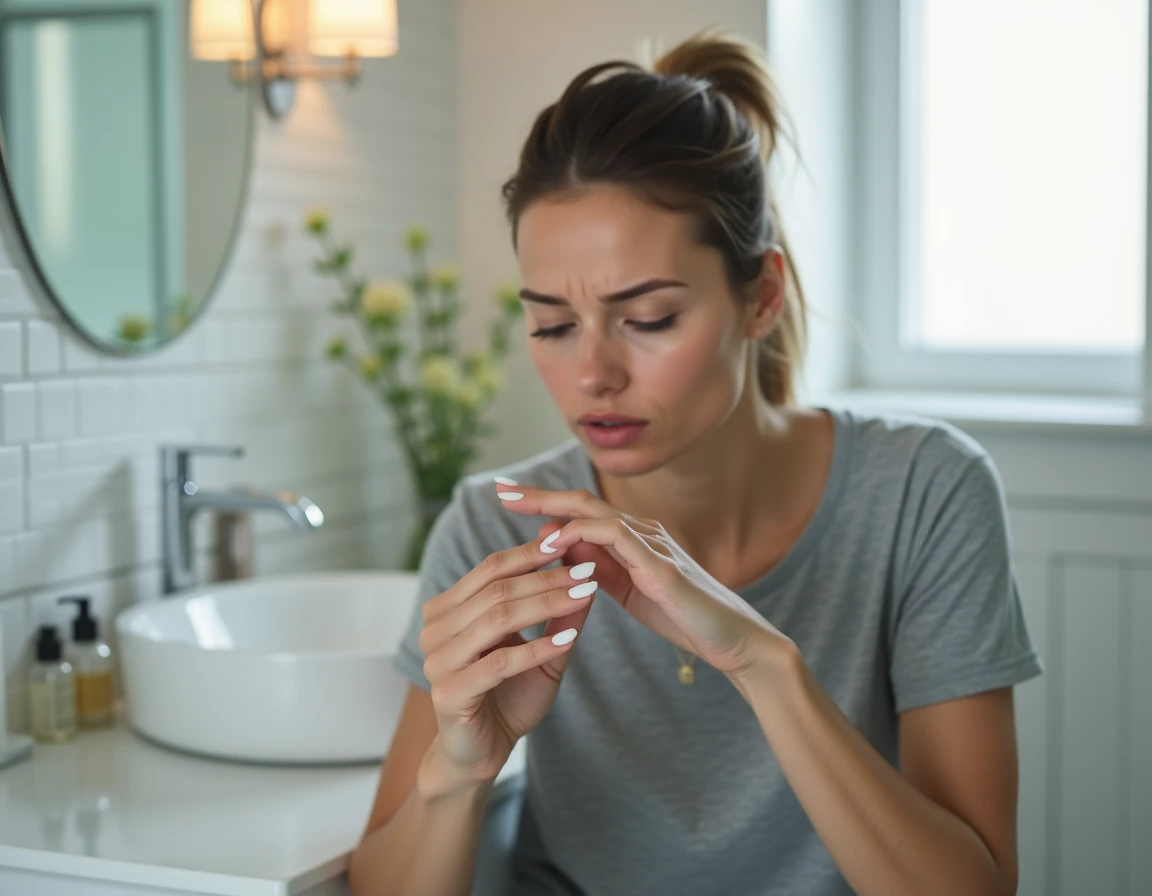
Not all white nails after removal are solely due to dehydration. Two other common factors produce an almost identical visual result but require distinct responses.
Residues of base or embedded pigments
If the removal was not complete, micro-residues of gel base or pigments may remain trapped in the superficial layers of the keratin. The nail then appears white or irregularly spotted. A distinguishing sign: these residues are often located in patches, not uniformly across the entire plate.
A gentle buffing with a fine-grit block is usually sufficient to remove these deposits without further damaging the nail. Scraping or aggressive filing only thins the plate, worsening the problem.
Micro-cracks related to preparation filing
Before application, the surface of the nail is often filed to improve gel adhesion. If the filing was too aggressive, it creates micro-cracks in the upper layers of keratin. These cracks trap air, and the trapped air gives the characteristic chalky white appearance.
The difference from simple dehydration: micro-cracks produce a duller white, rougher to the touch. The nail takes longer to regain its normal appearance, as it must wait for the damaged part to grow out and be gradually trimmed away.
When a white nail after gel signals a fungal infection or a reaction to products
In a minority of cases, the whitening is not mechanical but pathological. Two situations warrant particular vigilance.
- A gradual thickening of the plate, accompanied by a crumbly texture or a yellowish coloration beneath the white, may indicate onychomycosis (nail fungus). The warm, humid environment under the gel promotes fungal proliferation, especially if polymerization was incomplete or if a partial lifting created a pocket of moisture.
- Redness or swelling around the nail, associated with itching, suggests an allergic reaction to resins or acrylate monomers contained in certain gels. UFC-Que Choisir lists regularly identify polishes and gel bases containing these substances deemed irritating or allergenic.
- Pain upon contact or abnormal sensitivity of the plate should prompt a consultation with a healthcare professional, as it may indicate damage to the nail bed beneath the visible keratin.
The sorting rule is simple: if the white is uniform, painless, without thickening and without texture change, it is very likely dehydration. If another symptom arises, medical or podiatric advice is necessary.
Restorative care: lipid oils before hardeners
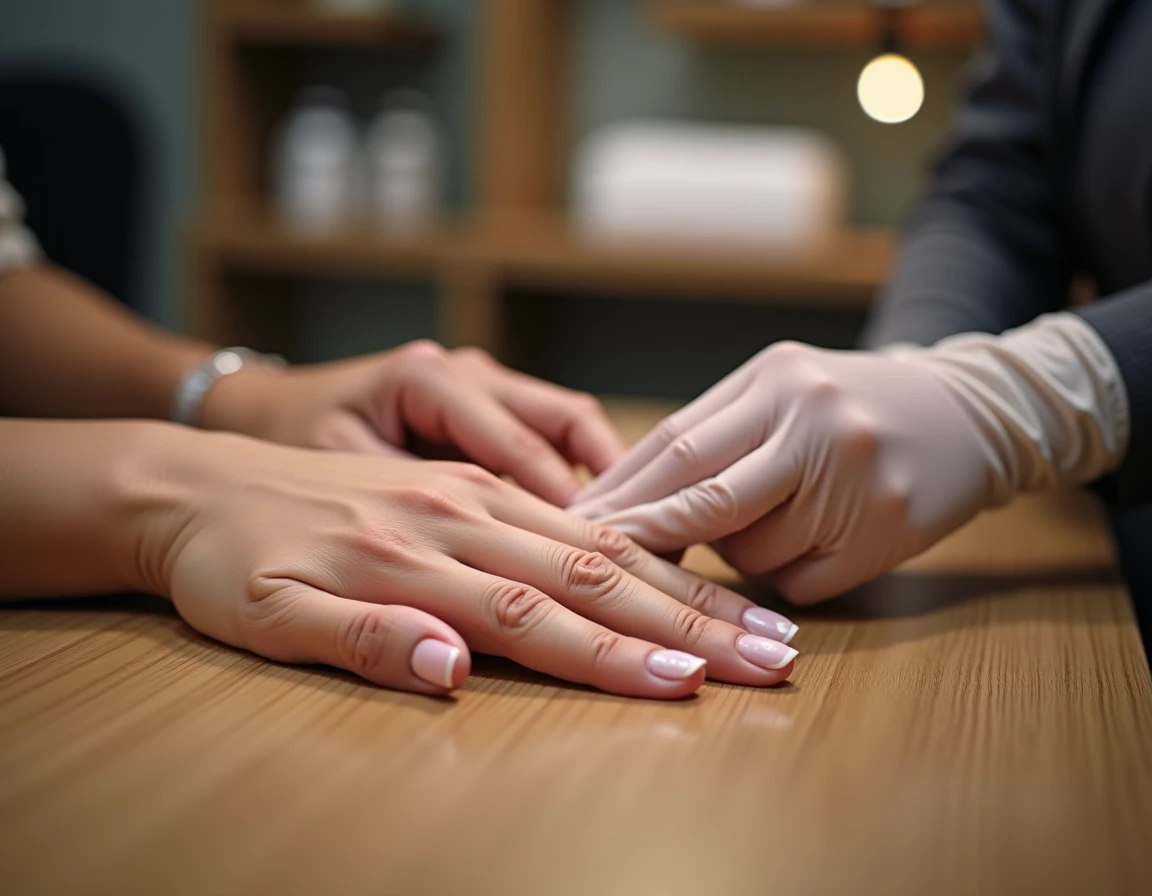
The most common reflex is to apply a hardener to “strengthen” the whitened nail. Specialized salon protocols recommend the opposite: restore the lipid film first before any strengthening product.
A hardener applied to a dried plate stiffens already brittle keratin, increasing the risk of cracks and breakage. The priority is to restore flexibility to the nail, not hardness.
The recommended protocol after the appearance of whitish nails is based on a few concrete actions:
- Apply a vegetable oil rich in fatty acids (sweet almond, castor) directly to the plate and cuticles morning and night for at least three weeks.
- Complement with an emollient hand cream that also nourishes the nail contour.
- Space out applications: leave the nail bare long enough for the whitened part to grow out and be trimmed. A fingernail takes several months to fully renew.
- When returning to gel, check the quality of polymerization (drying time appropriate to the lamp used) and limit preparation filing to the strict minimum.
The spacing between applications is a factor often underestimated. Continuously applying without breaks prevents the plate from recovering its natural hydration and perpetuates the whitening cycle.
Post-gel whitening remains a reversible phenomenon in the vast majority of cases. The keratin gradually renews, and a well-nourished nail regains its pink transparency over the weeks. The only real trap would be to mask the problem under a new layer of gel before allowing the plate to regenerate.