No thermal auger works universally, despite the variety of models displaying similar powers. The drilling depth depends not only on the motorization but also on the diameter of the bit, the soil density, and the clutch system.
Marked differences exist between equipment intended for landscaping maintenance and those designed for construction work. The choice of equipment relies on a series of technical criteria rarely specified by manufacturers. Some specific accessories, often overlooked, nevertheless influence safety and productivity on the ground.
The advantages of a thermal auger for your gardening and construction projects
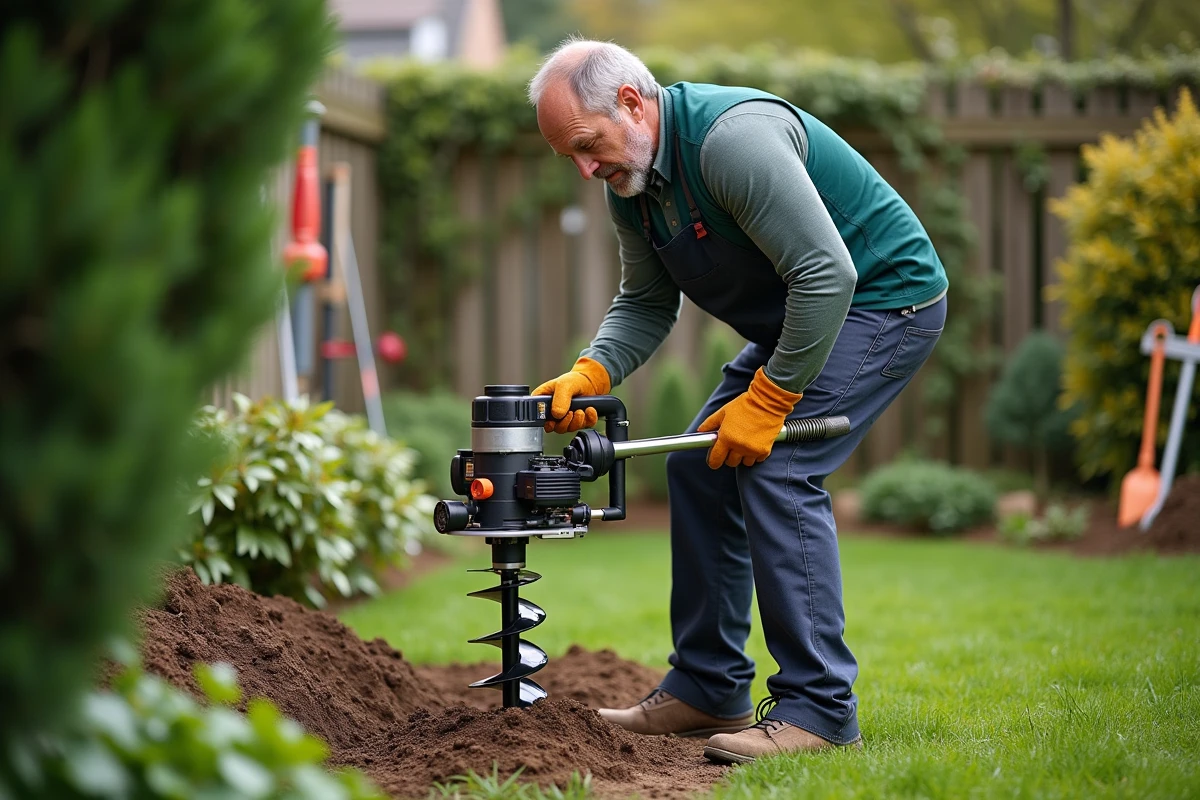
The arrival of a thermal auger on a job site radically changes the game. Whether it’s to dig holes for planting or to install light foundations, the constant power of a gas auger takes over when arms alone struggle to advance. This mechanical support reduces effort, ensures consistent work, and allows for perfectly controlled depth, even in the most unpredictable soils.
What is appealing is the versatility: from one project to another, simply adapting the bit allows for switching from post installation to creating flower beds or carrying out small foundation work. With interchangeable bits, the same machine transforms according to current needs. Some models go further and integrate an automatic clutch, making the tool safer and limiting jolts, both for an experienced user and for a novice.
The value for money remains at the heart of concerns, whether one is a demanding amateur or a professional. What truly distinguishes the models is the durability of the engine, the reliability of the bits, and the ability to work for hours without faltering. To navigate the offerings, it is useful to consult specialized sites like https://www.tariere-thermique.com/, which provide comparisons based on tests, field feedback, and expert opinions. This helps to aim for the best thermal auger for each use, from occasional gardening to more robust construction sites.
What criteria really make a difference when choosing?
The choice of a thermal auger is not to be taken lightly, as the diversity of models requires careful examination. Several technical characteristics deserve scrutiny: the power of the engine, expressed in cm³ or horsepower, determines the ability to tackle hard or rocky soils. The higher the power, the more the machine advances effortlessly in the most compact terrains.
To help you see clearly, here are the main elements to compare:
- Type of bit: select the diameter based on the work to be done. For planting, a fine bit is sufficient; for stakes or foundations, a wider diameter is needed.
- Number of people required: some models are designed for solo use, while others require two people for more stability and safety.
- Weight and ergonomics: comfort of use is not a detail, especially during long sessions: handles, balance, ease of grip.
- Inclusion of bits or extension bits: complete packs facilitate immediate handling and help avoid the last-minute purchase of additional parts.
Also evaluate the value for money beyond the simple displayed amount. The robustness of materials, ease of maintenance, and availability of spare parts make a difference over time. Depending on the intensity of use and the nature of the soils, the thermal auger may be preferred over an electric or manual auger. A thoughtful choice therefore involves an honest analysis of your needs, frequency of use, and terrain constraints.
Practical tips and tricks for using and maintaining your thermal auger
To harness the potential of a thermal auger, it is important to adopt a few reflexes from the first use. Before each session, systematically check the engine oil and fuel. A poorly maintained machine quickly loses efficiency. Ensure that the bits are correctly installed, whether they are models included in the kit or extensions added for depth. On loose soil, let the machine do its work without forcing: the engine is designed for that.
Vigilance should never wane. Reinforced gloves, protective glasses, and suitable shoes are essential for every session. Before starting, clear the area of any hidden obstacles. For deep drilling, stabilize the auger, holding it firmly with both hands. If the machine jams or gets stuck in tough soil, simply turn off the engine before intervening; there is nothing to gain by forcing it.
Regular maintenance: the key to longevity
Here are the actions to incorporate into your routine if you want to keep your auger operational for a long time:
- Thoroughly clean the bits and the area around the engine after each use.
- Check the condition of the accessories and ensure to sharpen the bits regularly: this facilitates drilling and preserves the mechanism.
- Inspect and tighten the fasteners: the vibrations from the engine can sometimes loosen the nuts during prolonged use.
Remember to run the auger idle for a few seconds before starting work. Use the extension bits for deep drilling. Always store the tool in a dry place, away from dust. A maintenance kit including a spark plug, air filter, and suitable oil is a valuable ally. It is these actions, repeated with each use, that will make all the difference in the lifespan of your thermal auger.
Choosing the right auger ensures that each hole opens exactly where you intended, without unnecessary resistance or wasted time. The success of a project sometimes hinges on the reliability of the chosen tool and the diligence applied to its maintenance.