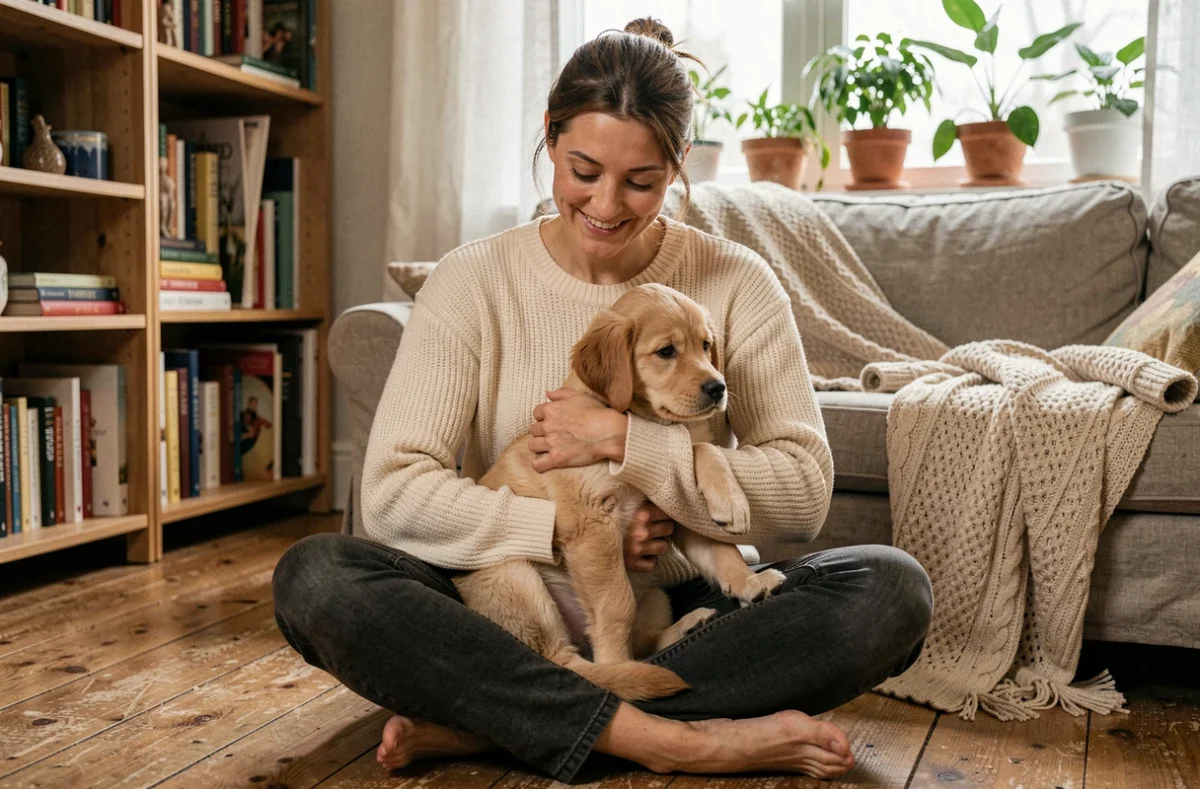
During the years a dog spends by your side, you may move house, welcome a new baby, separate from a partner, go on holiday or even be hospitalized. Welcoming a dog means anticipating not only their everyday needs, but also the moments when their owner’s life takes an unexpected turn.
According to data published by animaux.fr in November 2026, a significant proportion of dogs taken into shelters are there as a direct result of changes in their owners’ personal or family circumstances. This finding changes how you should prepare to welcome a companion.
Make a backup plan before adopting a dog
Have you thought about what would happen if you couldn’t walk your dog for three weeks? Or if a move meant you had to live somewhere that didn’t allow pets? These situations are not uncommon.
Before you even start looking for a dog, make a list of people you know who would be willing to step in. A friend, a neighbor, a family member: at least two reliable contacts who could take the dog in in an emergency. Without this safety net, the risk of abandonment increases as soon as something unexpected happens.
Realistic options fall into three categories:
- Your close circle (family and friends), who already know the dog and can take them in for a few days or weeks without a sudden change of environment.
- Foster families run by animal welfare organizations, often affiliated with local shelters, who temporarily care for dogs whose owners are going through a difficult time (hospitalization, loss of housing).
- A shelter, as a last resort. This is still preferable to abandoning a dog, but it causes considerable stress for the animal and adds to the burden on facilities already stretched by veterinary care needs.
Some of the dogs at La Fibre Câline have come from situations where their lives were disrupted in this way. Learning about their stories helps show the impact of failing to plan ahead.
I-CAD registration and documents required when transferring ownership
Identification is not just about complying with the law. It is the only reliable link between a lost dog and their owner. In France, the person transferring ownership (breeder, shelter or private individual) must provide the identification document and report the change of owner to I-CAD. The adopter then takes over responsibility for keeping their contact details up to date.
A move or a change of phone number: any change not reported to I-CAD breaks the traceability link. If your dog gets away, no one will be able to contact you. The French government’s legal and administrative information service reminds owners that identification (microchip or tattoo) is mandatory before any transfer of ownership, including free transfers.
Documents to request when adopting
Whether the dog comes from a shelter or a private individual, always ask for the identification card, an up-to-date health record and the transfer certificate. These documents protect both the animal and the new owner in the event of a dispute.
Food, walks and rest: the three pillars of everyday care
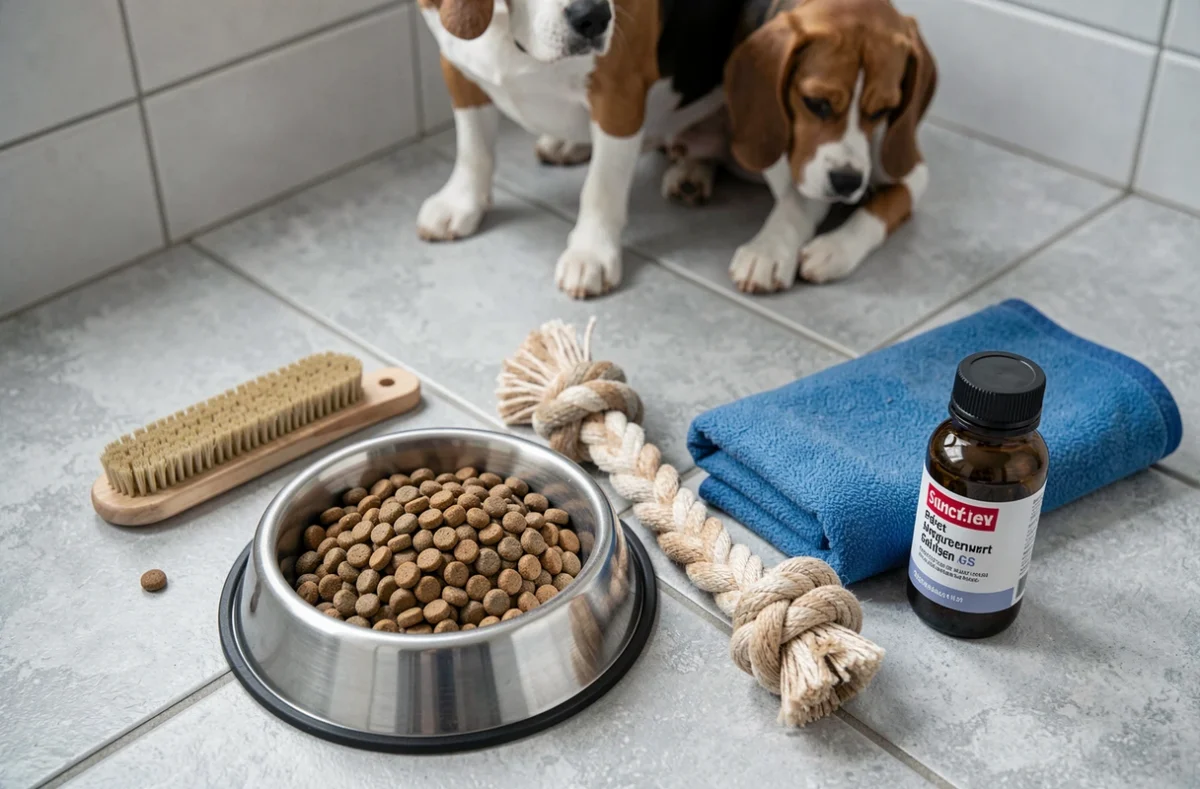
An adult dog needs regular meals, walks suited to their build and non-negotiable periods of rest. These three pillars may seem simple, but putting them into practice consistently takes real organization.
Food suited to your dog’s size and age
A small dog doesn’t eat the same way as a German Shepherd. Daily portions depend on weight, age and activity level. Your vet is the best person to advise you on portion sizes and whether to choose dry food, wet food or home-prepared meals. A sudden change in diet can cause digestive problems: transition over a week by gradually mixing the old food with the new.
Walks and physical activity
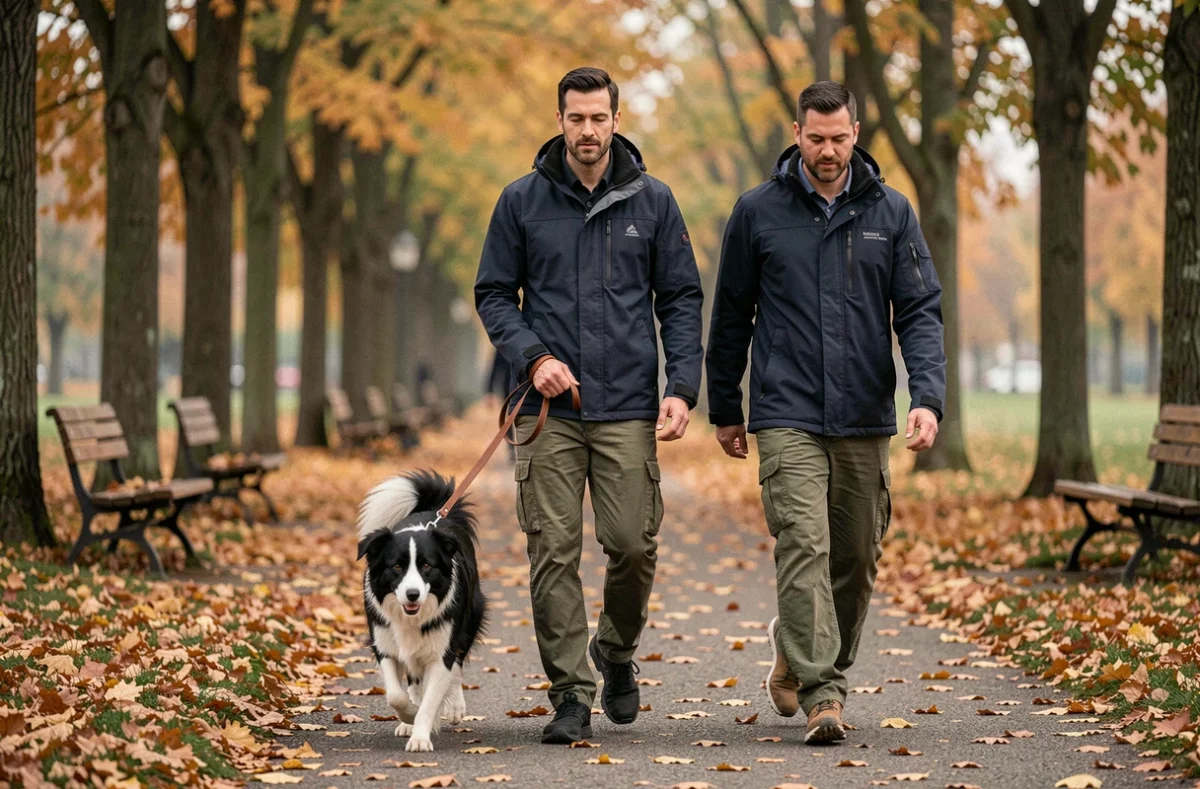
Walks are about more than bathroom breaks. They give dogs a chance to explore, sniff and interact with their surroundings. High-energy breeds (herding and hunting dogs) need more activity, such as scent-tracking games, running and obedience exercises.
Rest and a space of their own
Dogs need a space of their own, away from foot traffic, where no one disturbs them. Putting their bed in a busy hallway or next to a slamming door compromises the quality of their sleep, and therefore their behavior.
Living with children and other pets
The first few weeks set the ground rules at home. A newly arrived dog will observe, test boundaries and adjust. Children need to learn to respect signs of discomfort: a dog who turns their head away, yawns when there’s no reason to or licks their lips is asking for space.
Never leave a young child alone with a dog, even one they know well. This rule applies to all breeds and sizes. Accidents often happen when an adult leaves the room “just for a minute.”
If you already have other pets at home, introduce them gradually. Use a neutral room, keep interactions brief and supervise them at all times. Forcing them to live together from day one creates stress for everyone.
Veterinary costs and your dog’s health care
Vet visits are about more than annual vaccinations. Dental cleaning, deworming, parasite treatments and possible neutering or spaying: health care is the most variable and least predictable expense. An accident or chronic illness can make your bill five times higher in a single year.
Before adopting, look into pet insurance and set aside a fund for unexpected medical expenses. Shelters warn that veterinary care puts a heavy strain on their capacity, and owners who can’t afford a large bill sometimes feel forced to give up their pet.
A dog who is welcomed into a home properly is one whose arrival has been planned for beyond buying a bed and a food bowl. Administrative requirements, a backup plan for difficult times and a realistic health care budget are the often-overlooked foundations of a successful adoption. The real commitment begins before the first meeting.