
Success in the kitchen often relies on precision, especially when it comes to following recipes that require exact measurements of ingredients. Given the diversity of measurement systems around the world, mastering conversions can prove fundamental. Measurements in milliliters, grams, cups, or ounces must be interpreted and adapted accurately to ensure the harmony of flavors and textures. The ability to convert these units of measurement with ease is therefore an essential asset for any cook wishing to explore new recipes or share their culinary creations beyond their cultural borders.
The Fundamentals of Measurement Conversion in Cooking
The conversion of measurements in cooking is an essential skill for anyone looking to follow a recipe with rigor. From one system to another, the units of measurement vary: centiliters and milliliters coexist with grams and kilograms. A clear conversion chart is therefore a valuable ally. Let’s take a concrete example: converting 40 cl to grams poses no difficulty when you know that one centiliter equals 10 milliliters and that one liter of water weighs one kilogram. 40 cl of water corresponds to 400 grams.
Measurements taken with kitchen utensils such as the teaspoon, which holds 5 ml, or the tablespoon, must be converted with comparable precision. The weight of a teaspoon of salt is not equal to that of a teaspoon of sugar; similarly, the density of ingredients influences their mass. This is why knowledge of equivalences such as ‘1 cl equals 10 ml’ or ‘100 g equals 0.1 kg’ is essential.
Respecting the equivalences between units of measurement is crucial for the success of culinary preparations. Whether you are measuring liquids or dry ingredients, the rigorous practice of conversion ensures the integrity of recipes. Using a kitchen scale often proves indispensable for converting accurately and ensuring that each ingredient is measured with the precision required by the recipe creator.
Strategies and Tips for Accurate Conversions
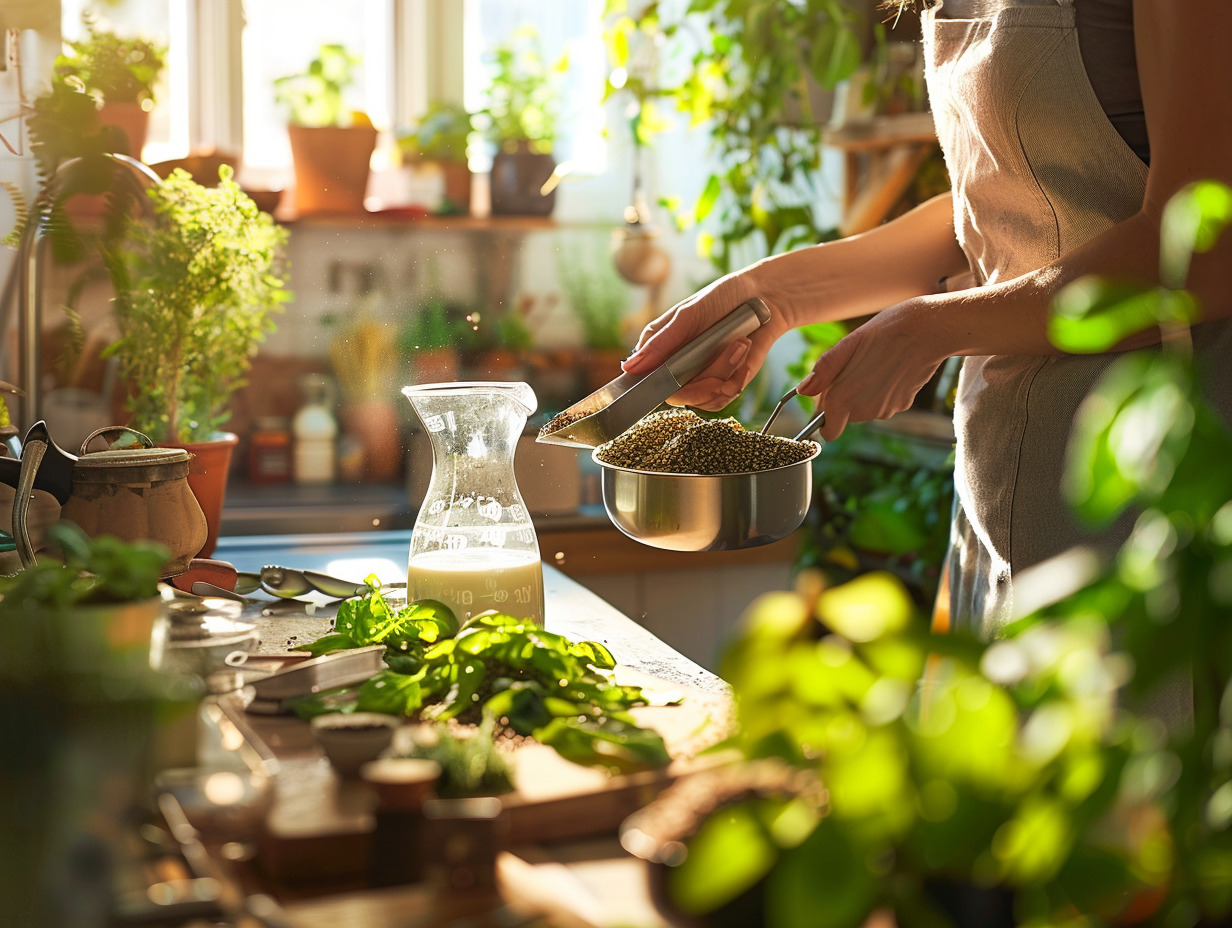
The field of cooking requires particular attention to detail when it comes to measurement conversions. Beyond having a reliable conversion chart, it is wise to adopt suitable tools such as a high-precision kitchen scale. This instrument allows for converting units of measurement reliably, thus avoiding errors that could compromise the texture and taste of dishes.
For liquid ingredients, mastering equivalences is essential. A teaspoon, for example, holds 5 ml of liquid, and this measurement must be adhered to precisely. Recipes often call for measurements such as tablespoons, whose capacity varies slightly by country but generally hovers around 15 ml. A thorough understanding of standard equivalences avoids risky approximations.
Regarding dry ingredients, conversion is even more delicate. The weight of an egg, for example, can vary significantly, although the average is around 50 grams. It is therefore advisable to weigh each ingredient individually to closely reflect the intentions of the original recipe.
The conversion of units is not merely a formal exercise but a commitment to precision and quality. To convert accurately, rely on standardized measurements and precise measuring instruments. Rigor in conversion is the guarantee of a culinary result that meets expectations, both in terms of flavor and presentation.